For a long time, I had been looking for a book with the following characteristics:
- It discussed a universal topic.
- The subject was important enough to have a positive impact on people’s lives.
- It could be read by people of all ages, from 8 to 80 or older.
While searching, I began to wonder whether such a book really existed. Fortunately, the answer is yes. And there isn’t just one book. So far, there are two books that fit the profile:
- Learning Intelligence by Pierluigi Piazzi.
- Scientific Methodology for Everyone by Celicina Borges Azevedo.
In Learning Intelligence, Professor Pier, as his students call him, uses a clear, funny, and challenging approach to show what is wrong with Brazil’s education system and why the country ranks among the lowest in the world in education. See the PISA assessment.
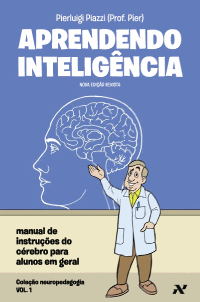
Drawing on his extensive teaching experience and knowledge of neuroscience, he shows that, in practice, Brazilian schools fail to take students’ brains into account. For knowledge to be assimilated, the education system needs to consider how the human brain works when it comes to learning.
The main problem is the bad habit of studying only on the eve of exams. That way, the material is remembered for the exam and then quickly forgotten. This creates a vicious cycle in which the student learns almost nothing.
The solution is to study a little every day. Don’t confuse studying with attending class. Studying is an individual activity in which students make an effort to put their notes about the class they attended and understood into their own words, using paper and pencil. This exercise creates more synapses than typing and, therefore, helps the material stick.
The final piece of advice is to study on the same day as the class, so that the lesson’s content isn’t forgotten.
This routine, which is consistent with how the brain works, can be summed up in a phrase coined by Pier: “A lesson taught is a lesson studied today.”
Professor Pier also wrote two other books, aimed at parents and teachers. To learn more, visit the author’s website at neuropedagogia.org. You can also read these articles by the same author: Tablet vs. Notebook and Book and A Student Is Not the Same as a Pupil.
The other book is Scientific Methodology for Everyone. Celicina begins by explaining that science must recover the ability to think simply to satisfy our own curiosity, without inhibitions or barriers—barriers that are often created by schools that are not prepared to teach.
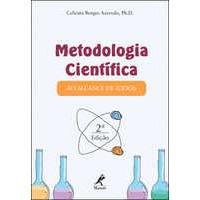
Celicina emphasizes that what defines a scientist’s work is this free-flowing thought, combined with the curiosity to explore and understand nature by formulating well-defined questions and trying to answer them with hypotheses that may or may not be confirmed through carefully designed experiments.
Scientific advances around us arise from repeating this cycle. That is why the book is so valuable. It presents this technique for exploring nature—which has the power to transform our lives—in language that is accessible to a wide range of readers.
The book gives several examples, explaining how scientists arrived at their discoveries, and ends by showing how to organize a science fair using the scientific method.
This book is used as a reference for science fairs in public schools in Rio Grande do Norte. Since then, several projects from these schools have stood out in Brazil and around the world.
Read more about how the book came about HERE.